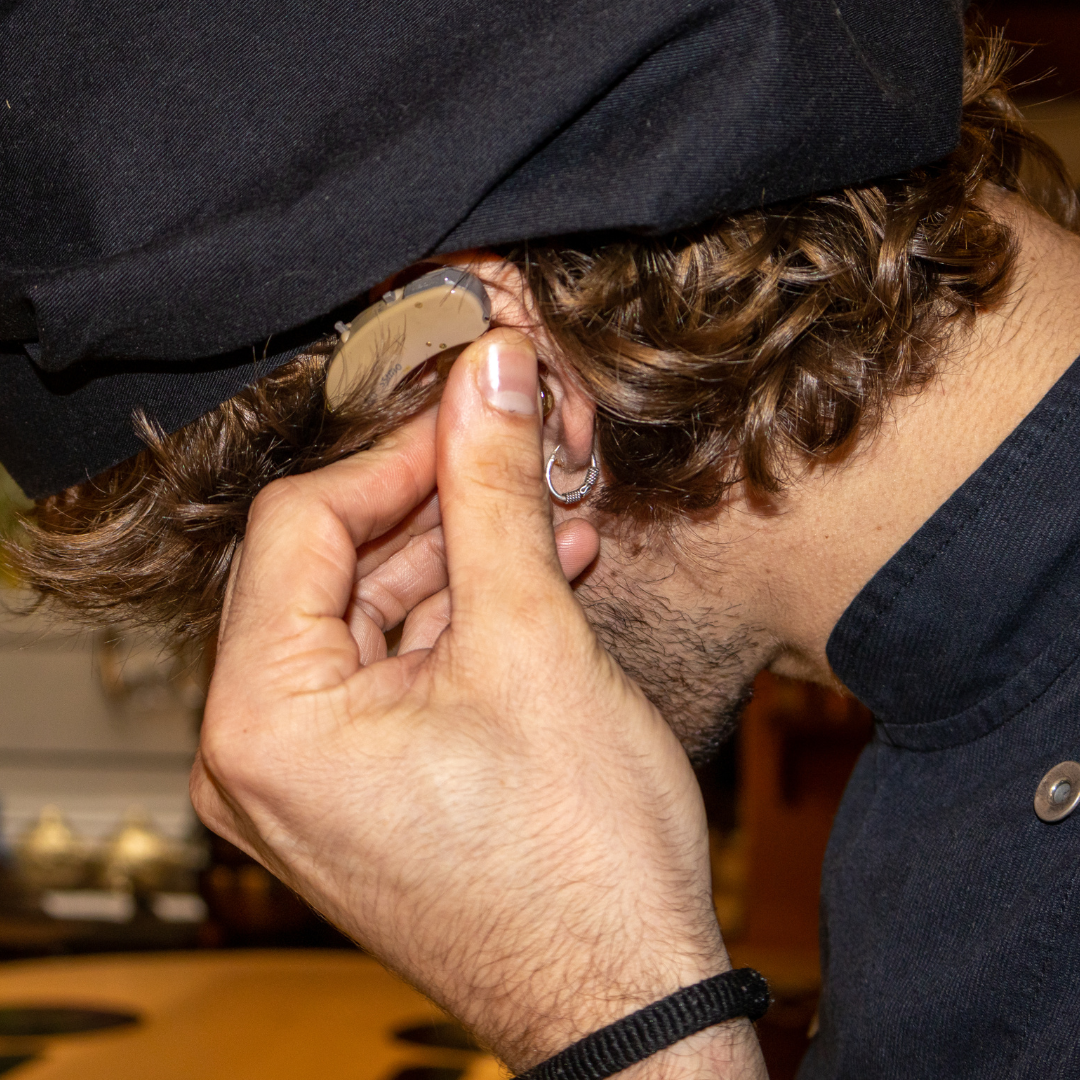
Tracking speech in busy dining venues can feel exhausting when environmental noise drowns out your hearing. Our clinical team can evaluate hearing across quiet settings and background-noise environments to pinpoint specific auditory challenges. Once the diagnostic etiology of your difficult hearing is established, we implement personalized clinical and technological strategies.
How Can Hearing Seem Normal at Home but Fail in a Restaurant?
Quiet rooms provide a favorable signal-to-noise ratio, meaning a speaker’s voice is much clearer than the sounds around it. Restaurants create the opposite situation. Competing conversations, background music, tableware clatter, and acoustic reflections clash with incoming speech, making auditory processing exceptionally strenuous.
Such listening challenges typically stem from high-frequency hearing loss, auditory-processing deficits, or accumulated noise-induced trauma. Poor visual illumination, mental fatigue, physical distance from the speaker, and divided focus exacerbate speech-recognition problems. Many individuals register normal audiometric thresholds on standard pure-tone screenings yet show profound deficits during speech-in-noise testing. Disproportionate difficulty in restaurants justifies professional clinical assessment even if your everyday home hearing appears intact.
How Is High-Frequency Hearing Loss Diagnosed?
The diagnostic workup opens with an extensive intake examining difficult listening environments, past noise trauma, tinnitus presence, family history, and medical history.
Pure-tone audiometry measures the softest sounds you can hear at different pitches through air and bone conduction. In high-frequency hearing loss, the audiogram reveals a sloping configuration where hearing acuity drops progressively as pitch frequencies increase. Diagnostic evaluations may also integrate acoustic tympanometry to check middle-ear pressure alongside word-recognition testing to evaluate speech processing.
Given that isolated quiet booths do not reflect chaotic restaurant acoustics, specialized speech-in-noise testing delivers invaluable diagnostic data. The test assesses word and sentence discrimination as background acoustic competition intensifies. Combined, these clinical findings determine whether your symptoms stem from acoustic audibility, word clarity, central noise filtering, or multifactorial causes.
Understanding Auditory Processing Disorders in Noisy Environments
A central auditory processing disorder disrupts the neurological transmission and cognitive interpretation of sound waves. The peripheral auditory system may register sounds within normal limits, yet the brain falters when separating competing acoustic inputs, sorting speech sounds, or tracking fast speech. We first rule out peripheral sensorineural deficits before deciding whether a dedicated auditory-processing test protocol or specialist referral is indicated.
How to Improve Speech Clarity in Challenging Acoustic Environments
Strategic behavioral modifications can substantially improve the auditory signal reaching your ears while maximizing supportive visual cues. Prioritize dining at establishments designed with subdued acoustics or reserve tables during non-peak business hours. Venues with booths, acoustic panels, curtains, carpeting, and other sound-absorbing features may be easier than open rooms filled with hard surfaces.
Upon entering the restaurant:
- Ask for seating positioned far away from open kitchens, noisy bar areas, ceiling speakers, and large parties.
- Position your chair against a perimeter wall to diminish competing auditory chatter behind your head.
- Face your conversation partners in good lighting.
- Reduce physical spacing between yourself and companions to maximize direct speech perception.
- Orient your stronger ear toward the key person you want to follow in conversation.
- Ask the speaker to rephrase the missed portion instead of repeating everything.
- Confirm important details rather than pretending to understand.
- Excuse yourself for a momentary quiet pause when listening exhaustion starts to mount.
- Request that dining partners articulate words distinctly at an unhurried, natural speed.
- Raised or shouting voices warp acoustic phonetics and rarely improve speech intelligibility.
Advanced Technology for Hearing in Background Noise
Determining the proper hearing technology hinges on the underlying disorder, everyday listening environments, and whether peripheral hearing loss is diagnosed. Professionally fitted hearing aids may use directional microphones, digital noise reduction, and dedicated restaurant programs to emphasize speech from the front and reduce some competing sound. Users should establish realistic expectations because no hearing device can fully eradicate all unwanted ambient speech.
Utilizing an external remote microphone can deliver a dramatically superior signal-to-noise ratio. The accessory is worn on the lapel or set near the speaker, streaming their voice directly into compatible hearing aids or wireless audio receivers. This reduces the effects of distance and surrounding noise.
Alternative assistive hearing tools include:
- Table microphones for small-group conversations
- Telecoil sensors configured to access hearing-loop broadcasts in looped facilities
- Smartphone speech-to-text or live-captioning applications
- Modern wireless hearables delivering directional beamforming and sound enhancement
- Decibel-monitoring apps and crowd-sourced dining platforms that track restaurant noise
Our audiology staff helps you evaluate options, ensures wireless compatibility, and trains you on operating your chosen equipment.
Professional Audiological Solutions for Loud Listening Environments
A hearing evaluation can move the conversation beyond “I hear fine in quiet.” Our audiology team assesses the unique environments, speaking partners, and ambient noise profiles that challenge you to choose targeted diagnostic tools. Clinical evaluation commonly integrates pure-tone audiometric testing, middle-ear analysis, word recognition, and speech-in-noise measures. Diagnostic auditory-processing testing may be recommended if your clinical symptoms and baseline evaluations suggest central auditory dysfunction.
Rapidly progressing, asymmetrical, or sudden hearing decline warrants an urgent clinical referral to an ear, nose, and throat physician. Tailored audiological treatment identifies the exact origin of listening breakdown rather than assuming environmental dining noise is the sole culprit.
Schedule a Diagnostic Hearing Evaluation Right Away
If noisy restaurant gatherings leave you struggling to follow dialogue, pulling away, or feeling completely drained, schedule an audiological evaluation with our team. Our clinical team will determine the best strategies to improve your hearing in noisy environments through custom hearing-aid programming, remote microphones, or targeted auditory rehabilitation.
Connect with us today to arrange your clinical visit and take the first step toward clearer, easier dining communication.
